
Roasted Brussels Sprouts — The Barefoot Contessa Cookbook (1999)
Did Ina Garten quietly invent a modern veggie classic?

Bright-eyed and apple-cheeked, Ina was immediately likable. Following her suggestions, I purchased a few of her home-baked cookies and brownies, some prepared salads, and a couple of excellent cheeses. After a few tastes I breathed a sigh of relief, now feeling assured that I would not starve, living and entertaining on the East End.
— Martha Stewart, in the forward to The Barefoot Contessa Cookbook
When I bought the store in the 1970s, we were all studying Julia Child’s The Art of French Cooking like it was the Bible and we had just found religion. Each recipe had three ingredients that were recipes in themselves. Dinner for six would take days to prepare. Now I had a business to run and needed to teach people how to cook wonderful food with as little time and expense as possible…
Food is not about impressing people. In fact, it’s just the opposite: it’s about making them feel comfortable. I invite friends to lunch and make bacon, lettuce, and tomato sandwiches. They are the best BLT’s I can make, with homemade white bread, thick slabs of smokehouse bacon, tomatoes from the garden, and Hellman’s mayonnaise. The meal is simpler than you expected and better than you remembered. And because there are no surprises, somehow, very subtly, it makes you feel safe and comfortable. And I think that is the best setting for really connecting with people.
— Ina Garten, in the introduction to The Barefoot Contessa Cookbook
Imagine an alternate timeline in which Martha Stewart starves to death after moving to East Hampton because some random gourmet food shop’s brownies were dry. And, sorry, can I call shade on “apple-cheeked?” If Martha Stewart called me (a relatively full-faced fellow) that in my own cookbook, I’d be shooting myself full of tizerpatide before the galleys were sent out. But Ina Garten obviously has a better body image than I do, as she should. She, at 78, looks exactly the same in photos as she did in the pages of 1999’s The Barefoot Contessa Cookbook. And I’m now going to immediately stop talking about women's appearances, lest I fall out of cultural favor like Mr. Blackwell or Giuliana Rancic.
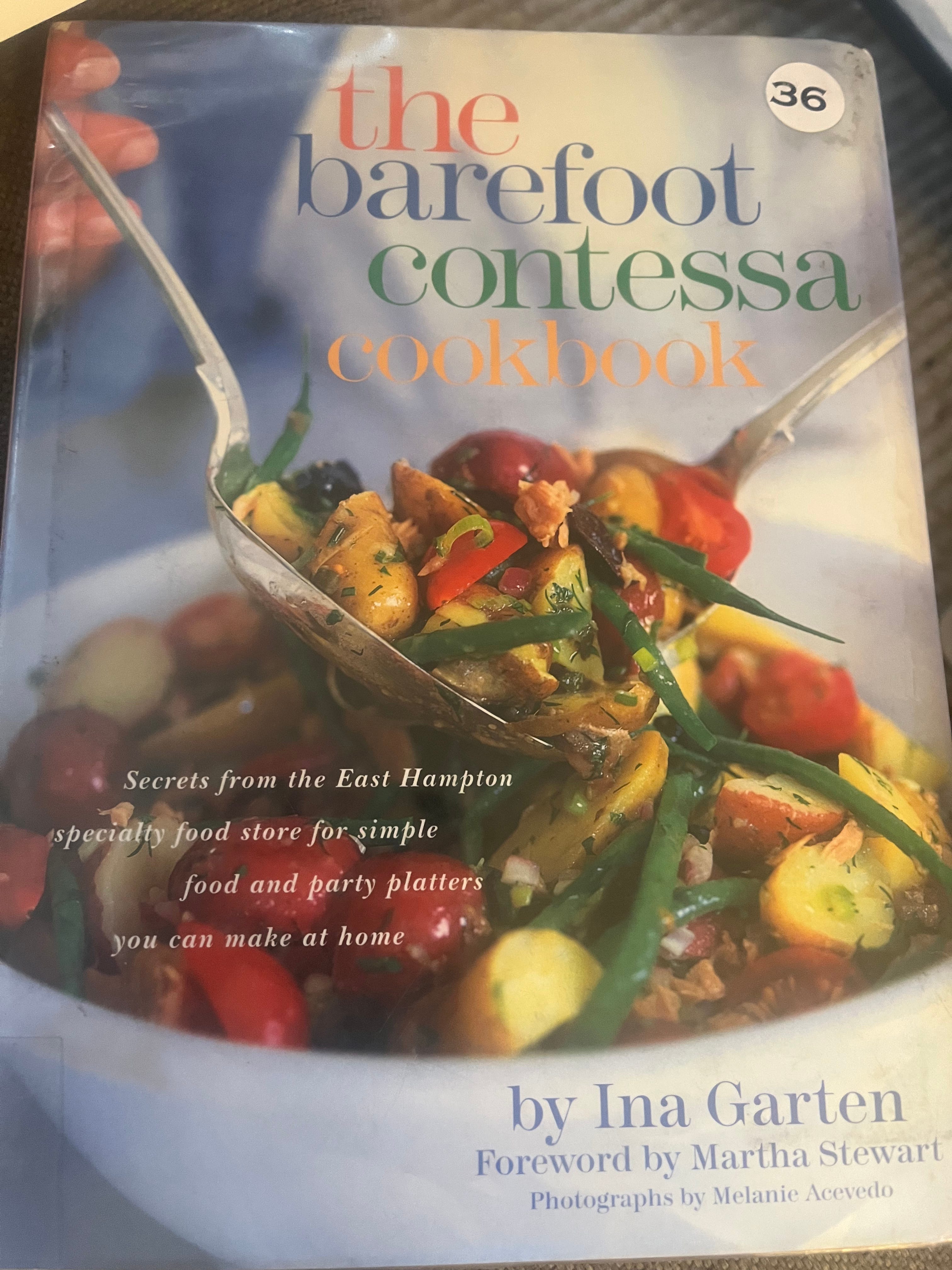
In 2026, Ina looms almost as large in popular culture as her mentor Martha, and I would argue she’s a much more influential recipe developer. Is Martha Stewart’s recipe for anything the absolute BEST-tasting version? Can’t think of any. But ask a home cook about roast chicken or brownies or a dozen other stalwarts and they’ll point you to Ina. Since that first cookbook was published, followed by her Food Network show in 2002, Garten revolutionized home cooking by simplifying the process and amplifying the flavor. A generation after Martha (and two after Julia), Ina’s “easy,” “simple,” “weeknight,” “one pot,” descriptors became de rigeur for developers and outlets coaxing people into the kitchen after a long workday.
In her introduction, Ina admits that she’d much rather make people comfortable with her food than challenge their expectations. Her cuisine is pure blue-blooded Yankee clarity. She might take occasional jaunts to Paris and Italy, but her flavors are very American, very white. She rarely includes Middle Eastern, Latin American, or Asian ingredients, and it’s as if the African diaspora doesn’t exist at all. To be fair, a global Garten would feel costumy, like Nancy in her kente cloth. There’s no Sandra Lee-style Kwanzaa celebration over at Ina and Jeffrey’s, and we’re all better for it.
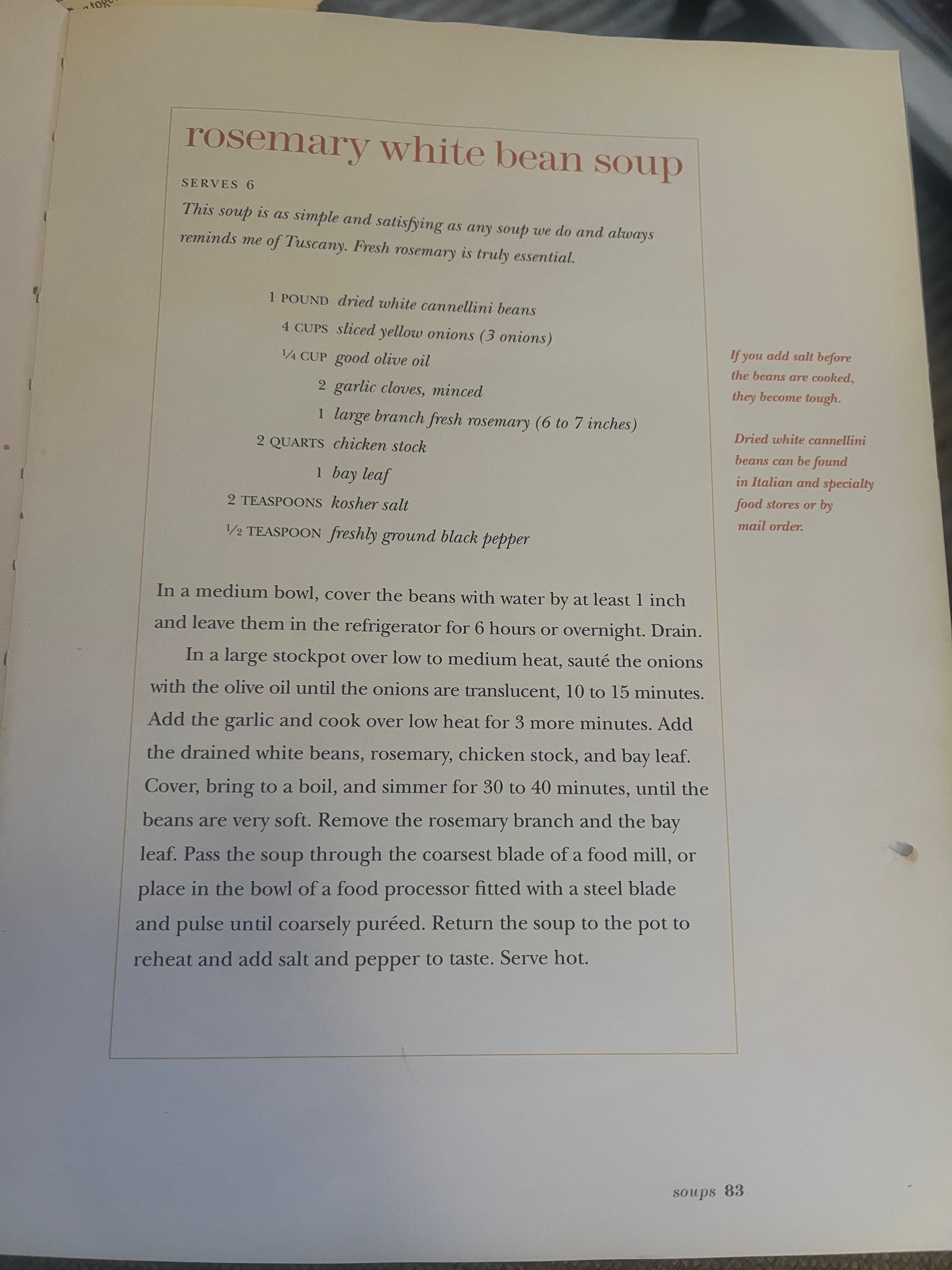
Ina’s beloved recipes are most often framed as comfort food, the platonic ideal of “regular” cooking, a basic version of something that others can expand or riff on. But she’s more trend-savvy than she gets credit for. Take the Rosemary White Bean Soup from The Barefoot Contessa Cookbook. Her description:
This soup is as simple and satisfying as any soup we do and always reminds me of Tuscany. Fresh rosemary is truly essential.
Ding ding ding. Ina said the T word. It’s hard to overstate the centrality of Tuscany in the late 1990s public imagination. I haven’t watched the Carolyn / JohnJohn show yet, but I imagine Ryan Murphy makes the characters name-drop Tuscany 3-4 times per episode. Frances Mayes’ renovation-porn memoir Under the Tuscan Sun was published in 1996, and suddenly the English-speaking world was enamored by the relatively untouristed Italian region. Many of Garten’s Hamptons clients were probably returning from rented Etruscan villas, and her soup (a sort-of zuppe but without the stale bread traditionally used as a thickener) cushioned the post-vacation blues.
I’ve never been to Tuscany (other than a couple of days in Florence when I was in college), and I’ve never read Under the Tuscan Sun or seen the movie version, so I don’t have much of an emotional attachment to these flavors. When I initially planned to make the soup a couple of weeks ago, it felt like a perfect late-winter dish, a last March hurrah before the green spring produce starts to appear. I didn’t even have to buy any ingredients other than onions and the “essential” sprigs of fresh rosemary. I already had dried white beans (Rancho Gordo Ayocote Patachete — close enough to cannellini), garlic, bay leaves, “good” olive oil (from Italy!) and my version of “chicken” stock. All I needed was to turn on the heater, put on a comfy sweater, and start flicking that ladle.
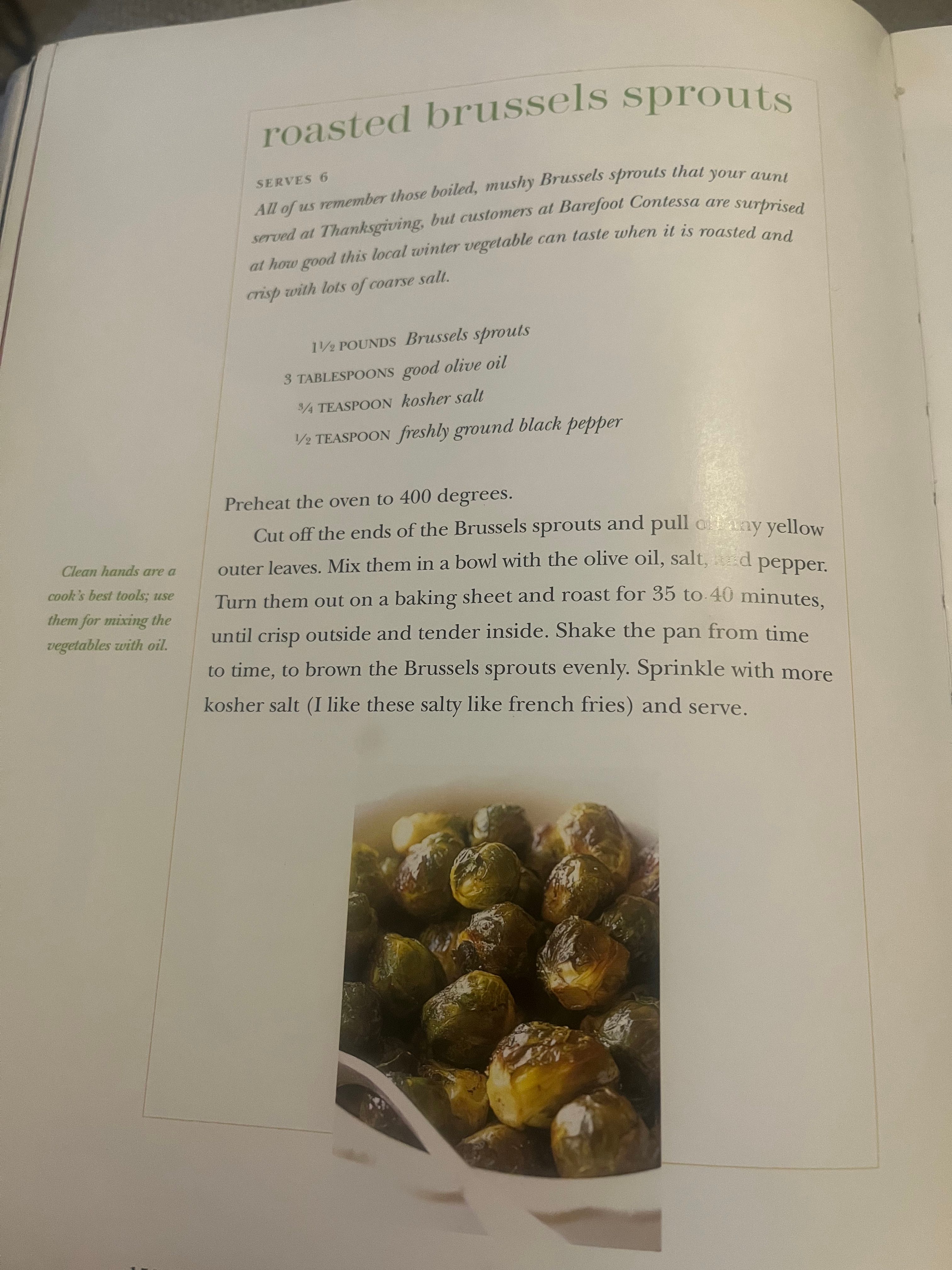
Unfortunately it hit the high 90s in LA, so suddenly nothing sounded more disgusting than hot, creamy bean soup. I pushed back my Ina project (even though I had to buy new rosemary) and waited until the mercury dropped to a manageable 82. I wanted to pair the soup with some veggies, and I noticed an extremely simple Roasted Brussels Sprouts hiding out on page 130. It looked tasty, and I hadn’t cooked Brussels much at all this winter, so why not? At first I didn’t think there’d be much to write about.
Roasted Brussels sprouts are now so ubiquitous that it seems unimaginable that they were unheard of (in restaurants or at home) thirty years ago. My elder Millennial NYC bias erroneously made me assume that David Chang first popularized them with the bacon and kimchee version at Momofuku Noodle Bar in 2002 and the (still iconic!) fish sauce ones at Ssam Bar in 2006. And yes, these Changian recipes surely helped launch 1,000 mediocre Brussels sprout appetizers on John Taffer-approved menus all over our pathetic country.
But, as we can see in 1999’s The Barefoot Contessa Cookbook, Ina was dishing them out in East Hampton while Chang was still learning his mother sauces (in between screaming and smoking a lot) at the French Culinary Institute. Did Garten just decide to throw them on a sheet pan and crank the oven up to 400 on a whim? Probably not. Slate published an article in 2014 about the history of roasted vegetables. In it, author J. Bryan Lowder credits Providence, RI’s Johanne Killeen and George Germon, whose influential 1991 cookbook Cucina Simpatica led chefs all over the country to experiment with roasting veggies. The trend was covered in a 1993 Florence Fabricant NY Times piece, which quotes David Bouley, Alfred Portale, and other early '90s kitchen luminaries. Interestingly, Brussels sprouts are never mentioned in the Fabricant article. But they must have been on a few Manhattan menus before Garten started roasting them out East.
If they weren’t, and Garten DID fully invent the roasted Brussels sprout, she should sue David Chang, storm the capital, throw herself a party, invite Bella Hadid, etc., etc. I don’t know if The Barefoot Contessa Cookbook was the first to include a recipe for roasted Brussels, but I do know that just two years earlier, in Deborah Madison’s Vegetarian Cooking for Everyone (1997), there are only three Brussels recipes, and all of them are boiled. If veggie vanguard DebMad hadn’t thought to turn on the oven by Clinton’s second term, it’s safe to say Ms. Garten is a bigger cruciferevolutionary (kill me) than the historical record admits.
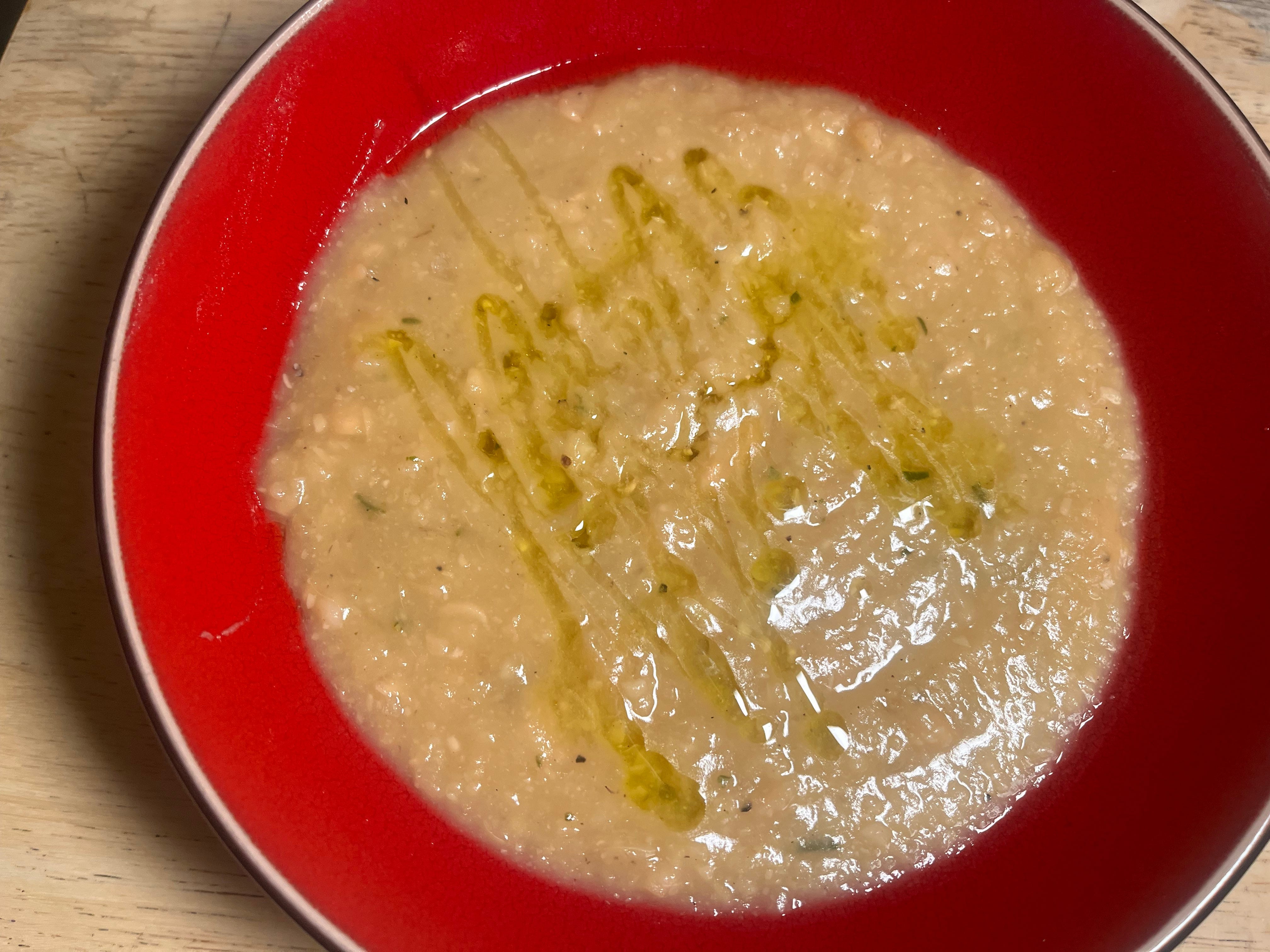
So, how do these two overlapping culinary trends, one at its apex and one at its birth in 1999, taste in 2026? The soup was hearty, mellow, and sweet with not-quite-caramelized onions. The rosemary flavor is pronounced, and the semi-purée (I used an immersion blender rather than a food mill or processor) allows for a bit of welcome beany texture. But my God they need a squeeze of lemon! I don’t know how they do things in Pisa or Amagansett, but in California we like our citrus. No offense to Ina, but lemon, parmesan, and a dash of (also desperately needed) chile flakes take this from a 5 to a 7.5.
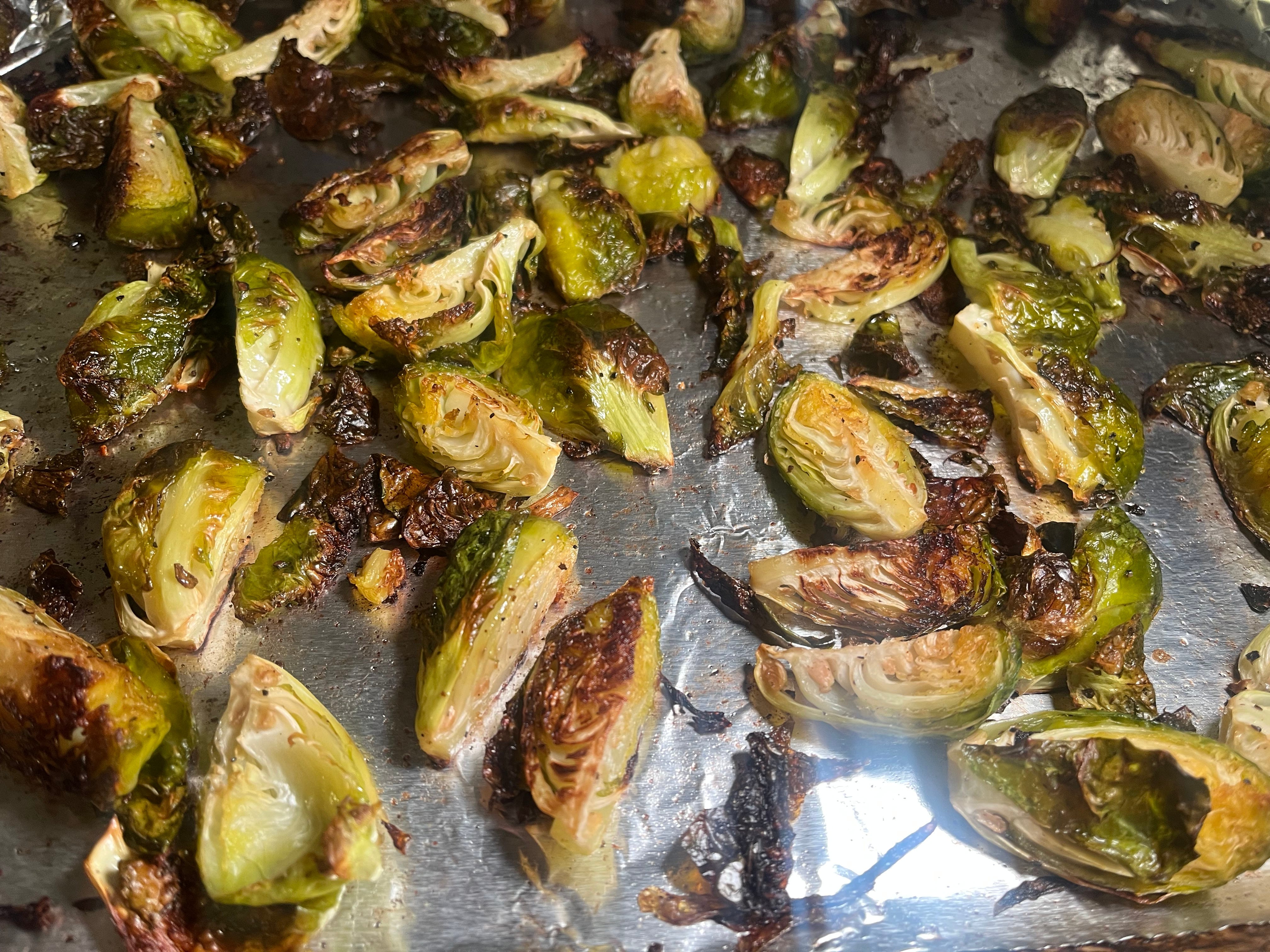
The sprouts, on the other hand, were perfect as is. Fresh out of the oven, crunchy, the outer leaves fallen aside and blackened on the pan. I’m a sucker for anything charred (I’ll toast bread twice in a row; sue me), and I had to remind myself that these veggies, covered in three generous tablespoons of olive oil, aren’t quite health food. I don’t want to overindulge, in case one day Martha’s writing the forward to my book and pierces my ego with a surgically precise “apple-cheeked” dagger.
Much as I appreciate Martha (she taught me how to fold a fitted sheet!), I laughed out loud at the idea of her starving to death in East Hampton.
I have that cookbook. The split pea soup is good (and meat free) but it makes quit a bit and by the time I’m done eating it, I’m sick of it but I never think to cut the recipe in half. The potato salad is really good (minus tuna) but has about 37 ingredients.